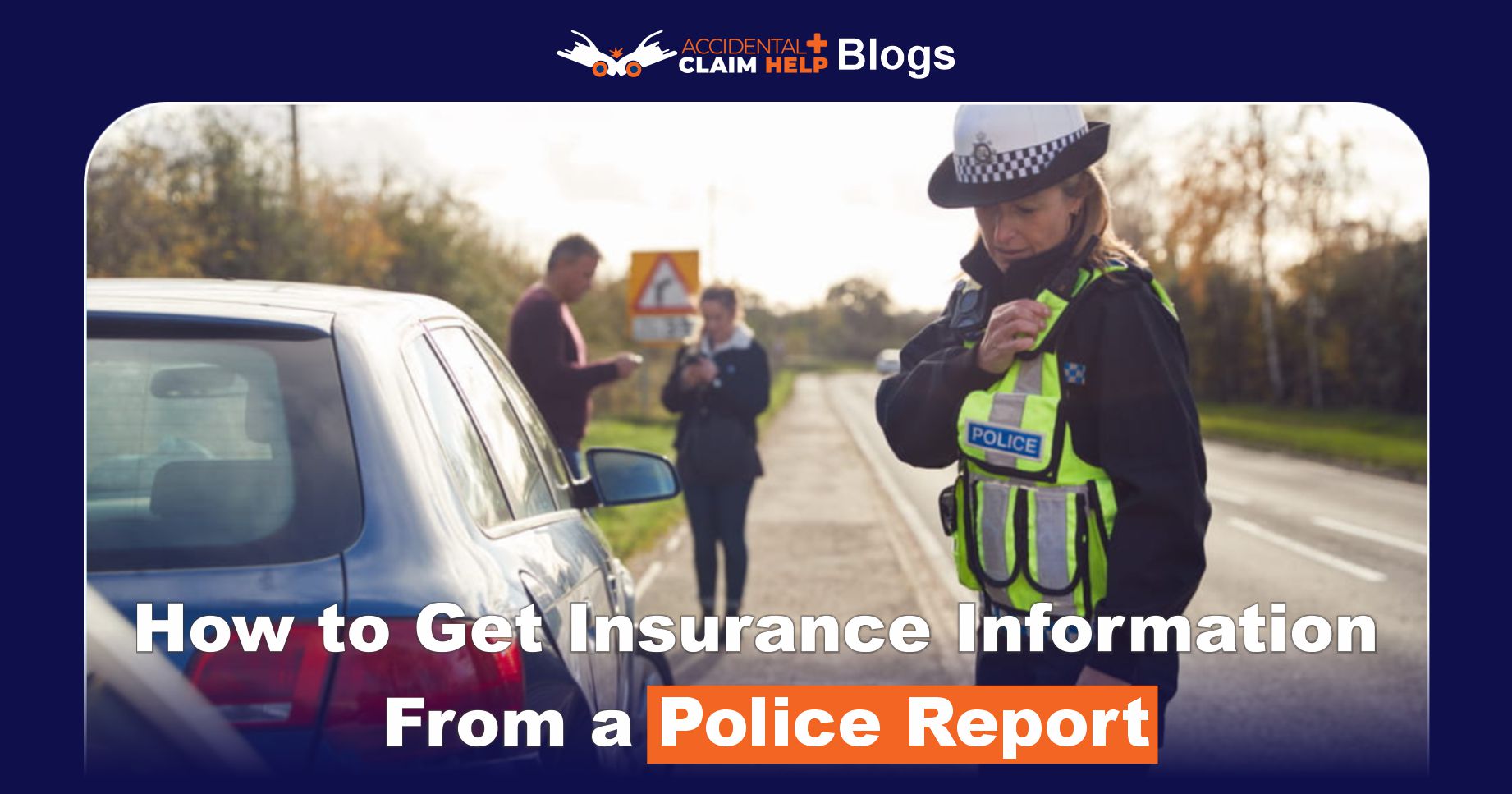
How to Get Insurance Information From a Police Report
When you ask for a copy of your police accident report from the law enforcement agency that responded to your crash, the report often lists the drivers involved and, if it was collected at the scene, the insurance company name and policy number. You request this report from the police department or through your state’s online request system, and then you can use it to help with your insurance claim.
That may sound like a lot at first, but don’t worry — we’ll walk you through everything step by step in easy language and answer the questions most people are searching for.
Why Police Reports Matter for Finding Insurance Information
A police accident report is an official document created by the officer who responds to a crash. It’s more than just a summary — it’s an official record that many insurance companies rely on when handling claims because it’s a neutral third-party account of what happened.
Police reports typically include things like:
- Date, time, and place of the accident
- Names of everyone involved
- Vehicle information like make, model, and license plate
- Sometimes weather or road conditions
- Witness statements
- Insurance information provided at the scene — if the driver gave it
But not all reports have insurance info in them if someone didn’t give it or the officer didn’t record it for some reason.
Step-by-Step: How to Get Insurance Information Using a Police Report
1. Get the Police Report After the Accident
Whether the accident was big or small, calling the police and getting an official report is almost always a smart idea. At the scene, ask the officer for:
- Their name and badge number
- The crash report number
- Instructions on how to get a copy of the report later
These details will make the next steps much easier once the report is finished.
Tip: The report usually takes a few days to be completed and filed — sometimes up to a couple of weeks.
2. Request a Copy of the Report
Once it’s ready, you can request your copy of the police report using one of these ways:
- Online: Many police departments have an online portal where you enter the crash number, your name, or date of the accident, and download the report.
- In person: Go to the police department’s records office and request it.
- By mail: Some places let you mail in a request form with your details.
Often you’ll need to pay a small fee to get a copy, but it’s usually not expensive.
3. Look for the Insurance Section in the Report
Once you have the report, open it and find the part where the officer lists the people involved. That’s where they often put each driver’s insurance company name and policy number — but only if it was given at the time of the crash.
So if you exchanged insurance info with the other driver (which you should always try to do), it might be right there. If it’s missing, don’t panic.
4. What to Do If the Report Doesn’t Have Insurance Info
Here’s where most people get stuck — the report doesn’t always include insurance details. It can happen for a few reasons:
- The other driver didn’t give their insurance info at the scene.
- The officer didn’t record it.
- The accident was minor and insurance details weren’t strictly needed.
If insurance isn’t listed, here’s what you can still do:
👉 Give the police report to your own insurance company. They can often use the information in the report — such as the other vehicle’s license plate number — to find the insurance carrier on your behalf.
👉 Your insurance adjuster might request the police report themselves. Some insurers handle it for you if you give them permission.
In most cases, your insurance company has access to databases and tools that can help track down the other driver’s insurer even if it’s not spelled out in the police report.
Tips That Make This Easier Next Time
Here are a few practical tips (based on what insurance experts suggest):
- Always exchange insurance info with the other driver right after an accident.
- Take pictures of everything — license plates, vehicle damage, and the scene.
- Ask the responding police officer how to get the report later and for the report number.
- Contact your insurance company as soon as possible — they often take on the heavy lifting.
Real-World Example
Imagine you were in a fender-bender and didn’t get the other driver’s insurance company name at the scene. A police officer came, took some basic information, and left. A couple weeks later you request the police report, but that section listing the insurance info is blank.
Here’s what to do:
- Submit the report to your insurer.
- Give them the other car’s license plate and driver’s name.
- Your insurer can search internal databases or DMV records to locate the insurance carrier and policy.
Even when the police report doesn’t list the insurance, your insurer can usually find it. That’s why insurance professionals recommend reporting every accident promptly.
FAQs
These are real questions people often search online when trying to understand insurance and police reports:
To check whether you have active insurance:
Log in to your insurance company’s website or app. They usually show your policy status right there.
Call your insurance agent’s customer service line.
Check your state DMV’s insurance verification tool, if they offer one.
Getting your police report is good for claims, but it doesn’t prove your insurance was active — only your insurer can confirm that.
Here’s how to do it, step by step:
Request a copy of your police accident report from the responding law enforcement agency.
Open the report and find the section where driver details are listed.
Look for the other driver’s insurance company name and policy number (if it was recorded).
If it’s not there, give the report to your own insurance company and let them help track it down.
Police reports often have insurance info, but it’s not always guaranteed
You can’t just look up someone’s insurance details personally — that information is private. But in most cases:
The police report may list their insurance if it was collected at the scene.
If it’s missing, your insurer can use the report and other details (like license plate or VIN) to find the insurance carrier.
Trying to find someone’s insurance without a valid reason or legal process can be hard due to privacy protections, so working with your insurer is usually the best avenue.
No — police don’t usually send the report to your insurance company automatically. That responsibility falls on you or your insurer. You may need to:
Give a copy of the report to your insurance company.
Ask your insurer to request it on your behalf.
So even if the report exists, your insurer might not see it unless you or they ask for it.
Yes — especially for minor accidents where there are no injuries, and damage is not substantial. (See full details). But:
Having a police report makes filing a claim easier because it adds official documentation of what happened.
In serious crashes, a report helps prove fault and what happened, so it’s usually worth getting one.
If you skip the police report, you might have to rely on photos, witness details, and your own version of what happened — which can slow claims down.
Wrapping It All Up
So, how to get insurance information from a police report?
It comes down to three main steps:
- Get a copy of the police accident report from the responding law enforcement agency.
- Look for the insurance section in the report — this might have the company name and policy number.
- If it’s missing, work with your own insurance company — they have tools and access to help track down the other driver’s insurer.
Police reports are useful, but they don’t always provide every detail. When they don’t, your insurer usually fills in the gaps.